
Three things to know
- Both eGFR and urine albumin are important.
- Blood pressure and heart risk belong in the diabetes plan.
- Medication choices depend partly on kidney function and monitoring.
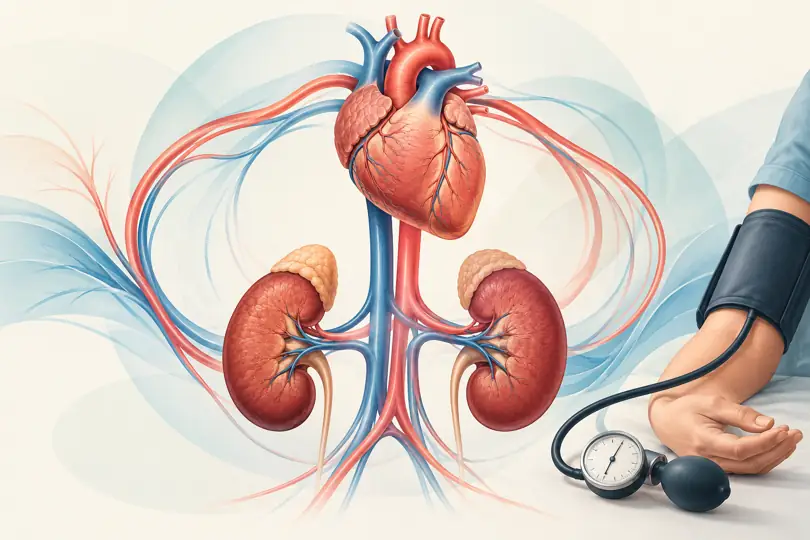
Why diabetes affects the kidneys
Over time, elevated blood glucose can affect the small blood vessels and filtering structures in the kidneys. High blood pressure may add further stress. Not every kidney problem in a person with diabetes is caused by diabetes, so unusual findings may need a broader evaluation.
Which tests to discuss
A blood test estimates filtration using eGFR; a urine albumin-to-creatinine ratio looks for leakage. Your clinician determines when screening should begin and how often to repeat it based on diabetes type, duration and results. Comparing prior reports helps distinguish a stable pattern from a new concern.
Protect three connected systems
A connected treatment plan
Management may address glucose, blood pressure, cholesterol, smoking and activity. Depending on the person, medicines such as an ACE inhibitor or ARB, an SGLT2 inhibitor, or other therapies may have kidney or heart benefits. These are not interchangeable choices and require assessment for eligibility, side effects and follow-up.
Avoid changing medicines on your own
Kidney function can affect the dose or suitability of diabetes medicines and the risk of low glucose. Ask for individualized instructions for illness, vomiting, dehydration or surgery. Share all prescriptions and supplements across your primary-care, diabetes and kidney teams.
Questions to bring to your visit
- Am I due for eGFR and uACR?
- Does my medicine plan protect my kidneys?
- What should I do when I cannot eat or drink normally?
Common questions
Can kidney disease develop without pain?
Yes. Diabetes-related kidney problems may have no early symptoms.
Should everyone with diabetes see a nephrologist?
Not necessarily. Abnormal or worsening tests, uncertainty about the cause or complex management may warrant specialist input.
Sources & further reading
- NIDDK: Diabetic kidney disease (opens in a new tab)
- KDIGO: CKD evaluation and management (opens in a new tab)
Education supports, and does not replace, individual care. Dialysis treatments and transplant evaluations are delivered through the appropriate dialysis programs and transplant centers. External resources do not imply endorsement of AspireMed.