
Three things to know
- Swelling and breathlessness have several possible causes.
- Kidney results can affect cardiovascular medication decisions.
- Some treatment changes require follow-up blood tests.
How the connection works
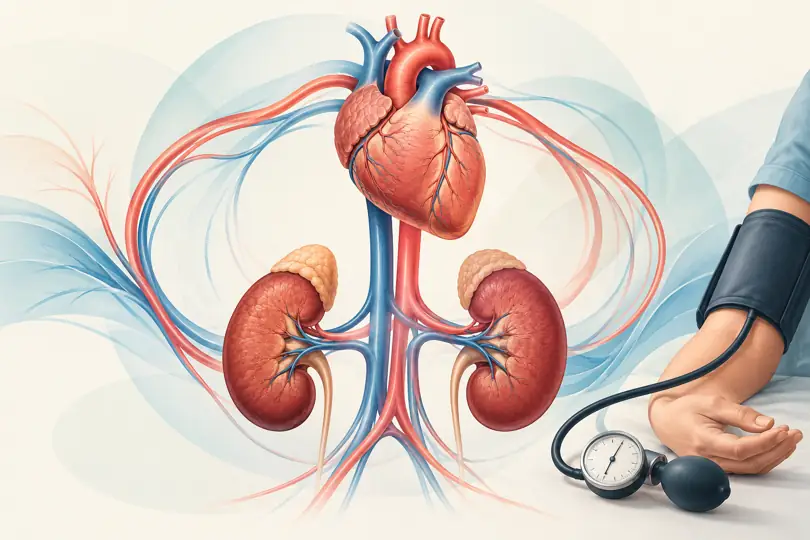
The heart pumps blood to the kidneys. The kidneys help regulate salt, water and blood pressure. When either system is affected, the other may be placed under strain. Clinicians sometimes use the term cardiorenal syndrome when heart and kidney problems interact.
What your team may monitor
Assessment may include blood pressure, weight changes, swelling, breathing symptoms, kidney function and electrolytes. The tests depend on your history and examination. A medication change may be followed by a blood test to check kidney function and potassium.
A shared plan across specialties
Why the medication plan needs context
Water pills can help manage excess fluid, but dosing depends on symptoms, examination and laboratory results. Some heart medicines also affect creatinine or potassium. A change in a test result needs interpretation; it does not automatically mean a helpful medicine should be stopped.
Where Internal Medicine and nephrology fit
Your primary-care physician can coordinate cardiovascular risk factors and overall health. A nephrologist contributes kidney and electrolyte expertise, while a cardiologist evaluates appropriate heart conditions. Share the same medication list and clarify which clinician to contact when your readings or symptoms change.
Questions to bring to your visit
- Should I track daily weight?
- Who should I call about swelling?
- When should laboratory tests follow a medication change?
Common questions
Should I drink more water to improve kidney results?
Extra water is not appropriate for everyone, especially with fluid overload. Ask for an individualized plan.
Does this replace cardiology care?
No. Internal Medicine and nephrology can complement cardiology when specialist heart evaluation is needed.
Sources & further reading
- NIDDK: Heart disease and kidney disease (opens in a new tab)
- NIDDK: Chronic kidney disease (opens in a new tab)
Education supports, and does not replace, individual care. Dialysis treatments and transplant evaluations are delivered through the appropriate dialysis programs and transplant centers. External resources do not imply endorsement of AspireMed.