
Three things to know
- Dialysis is a treatment, not a cure for kidney disease.
- Hemodialysis and peritoneal dialysis work differently.
- Treatment decisions consider the whole clinical picture.
| Feature | Hemodialysis | Peritoneal dialysis |
|---|---|---|
| Filtering method | Blood passes through an external dialyzer | Dialysis solution uses the abdominal lining |
| Access | Bloodstream access | Abdominal catheter |
| Setting | Center or a suitable home program | Usually home after training |
| Schedule | Prescribed by the dialysis team | Manual exchanges, a cycler or a combined plan |
| Shared needs | Training, monitoring and program support | Training, monitoring and program support |
When dialysis may be considered
Problems such as difficult-to-manage fluid overload, dangerous electrolyte changes or symptoms from waste buildup can prompt a dialysis discussion. Some situations require emergency treatment. Routine decisions are not based on an eGFR number alone and should include your goals and preferences.
The two main methods
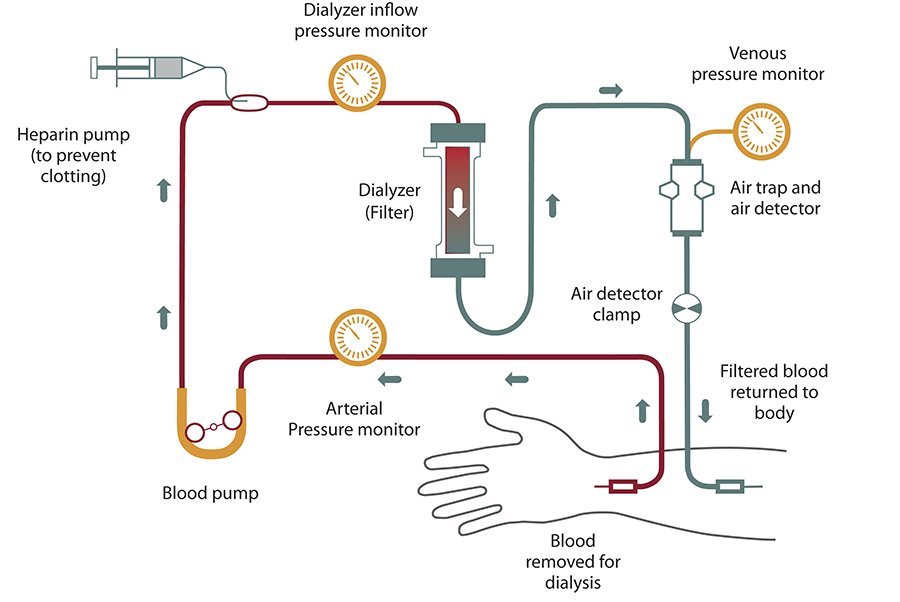
Hemodialysis uses a machine and filter to clean blood through an access to the bloodstream. Peritoneal dialysis uses fluid in the abdomen and its natural lining as the filtering surface. Each requires training, monitoring and a treatment schedule.
Compare more than the machine
Where treatment happens
Hemodialysis may take place in a center or at home through an appropriate home program. Peritoneal dialysis is commonly performed at home. Home therapy does not mean managing without support: the dialysis program provides training and follow-up, with responsibilities that vary by treatment.
How AspireMed education fits
A consultation can help you understand terminology, prepare questions and discuss kidney concerns. Dialysis treatment itself is delivered through an appropriate dialysis facility or home program. Transplant and conservative care may also be discussed so the options are presented fairly.
Questions to bring to your visit
- Why is dialysis being considered now?
- Which methods are medically suitable?
- What support will each option require?
Common questions
Is dialysis always permanent?
No. Some people with acute kidney injury recover enough function to stop, under their treating team's supervision.
Can I switch dialysis methods later?
Sometimes. Health, access, preferences and program availability affect whether a change is possible.
Sources & further reading
Education supports, and does not replace, individual care. Dialysis treatments and transplant evaluations are delivered through the appropriate dialysis programs and transplant centers. External resources do not imply endorsement of AspireMed.