
Three things to know
- Swelling alone cannot identify the cause.
- Sudden one-sided swelling needs prompt assessment.
- Do not start extra water pills or change fluid intake without guidance.
What to notice
Record whether swelling affects one leg or both, when it started and whether it improves overnight. Mention pain, redness, shortness of breath, recent travel or surgery, weight change and new medicines. These details can change the urgency and type of assessment.
How kidneys and the heart can contribute
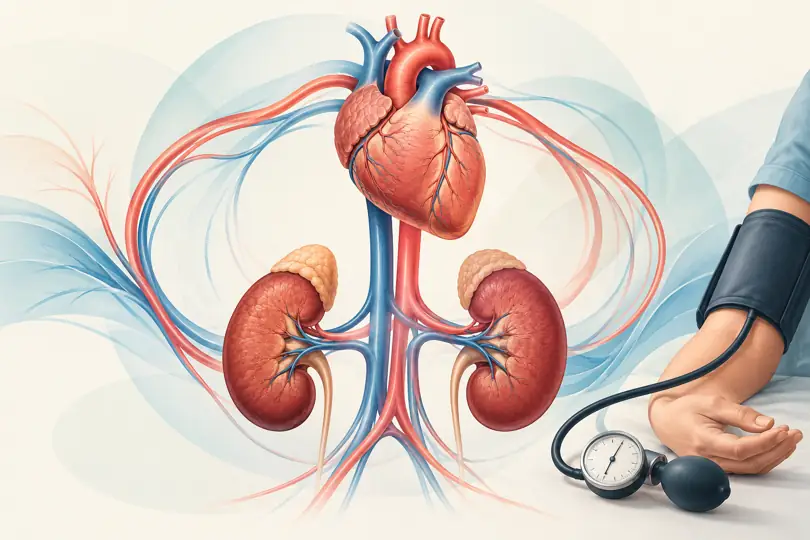
Kidneys help remove extra sodium and water. Some kidney diseases also cause substantial protein loss, which may contribute to swelling. Heart conditions can affect circulation and fluid balance. However, leg swelling is common for reasons unrelated to either organ.
Bring three useful observations
Why examination can matter
Your physician may assess circulation, lungs, heart, skin and medication history, supported by appropriate blood and urine tests. Imaging or urgent evaluation may be needed when a clot or other serious cause is suspected. A photograph or virtual discussion may not be sufficient.
Making the plan safe
Treatment addresses the cause. Compression, changes to medicines, diuretics or a tailored salt plan may be considered, but not every approach is appropriate for every patient. Ask whether to track weight and which changes should trigger a call. Your kidney function and electrolytes may need monitoring.
Questions to bring to your visit
- Could a medicine be contributing?
- Do I need an examination or urgent imaging?
- Should I monitor weight or blood pressure?
Common questions
Does swelling prove kidney failure?
No. An examination and appropriate testing are needed to identify the cause.
Should I drink less water?
Fluid advice depends on the diagnosis and current status. Avoid a blanket restriction without guidance.
Sources & further reading
- NIDDK: Heart disease and kidney disease (opens in a new tab)
- National Kidney Foundation: Albuminuria (opens in a new tab)
Education supports, and does not replace, individual care. Dialysis treatments and transplant evaluations are delivered through the appropriate dialysis programs and transplant centers. External resources do not imply endorsement of AspireMed.